
In wholesaling, every deal has two halves. Acquisition is getting a property under contract. Disposition is getting that contract into the hands of a buyer who will close on it. The first half gets most of the attention, because that is where the marketing spend goes. The second half is where the money is actually made.
"Disposition" is just the formal word for selling something off. In wholesaling it almost always means one thing: finding the end buyer for a contract you control and assigning it, or double closing, before your contract runs out.
Disposition vs acquisition
The two halves need different skills and, in larger operations, different people.
Acquisition faces the seller. It covers lead generation, calling motivated sellers, walking the property, estimating repairs, negotiating a price and signing the purchase agreement. Its job is a contract at a number that leaves room for an end buyer and a fee.
Disposition faces the buyer. It covers knowing who buys in the area, packaging the deal, marketing it, fielding questions and showings, qualifying offers, negotiating the assignment and getting everyone to the closing table. Its job is turning the contract into a closed assignment fee.
The two depend on each other more than most new wholesalers expect. An acquisition at the wrong price makes disposition impossible. A weak disposition process means even good contracts expire. And knowing your buyers before you sign a contract changes what you are willing to sign, which is why some wholesalers work buyer-first rather than seller-first.
The steps of a disposition
Most dispositions follow the same sequence, whatever the market.
1. Know who buys before the contract is signed
The best disposition starts before the contract exists. If you know which buyers are active in the county, what they pay and what they buy, you can tell during the seller call whether a deal will move. Without that, every contract is a bet.
2. Price the assignment
The end buyer's price is what matters, not the seller's. That means working back from what buyers in that area actually pay for comparable property in that condition, then deciding what fee the spread can carry. We cover this in more detail in comps, ARV and what cash buyers actually pay.
3. Package the deal
A deal package is what a buyer needs to decide without a long phone call: address, photos (including the bad rooms), repair estimate, comps, price, access and closing date. For landlords, add rent figures. For builders, add lot details.
4. Match and market
Here disposition splits into two styles. One is the mass blast: send the deal to every buyer on the list and see who answers. The other is matching: send it first to the short list of buyers whose buy box fits it, then widen if needed. Matching protects your relationships with buyers, because they learn that your emails are worth opening. We made the case for it in a disposition shortlist of ten buyers instead of five hundred.
Matching depends on knowing what each buyer's properties look like. In Agreedment, the Building pill lets you set min and max on eight pairs: Bedrooms, Bathrooms, Number of Stories, Total Units, Total Buildings, Building Area, Half Bath and Total Rooms. Return both to Select to clear.
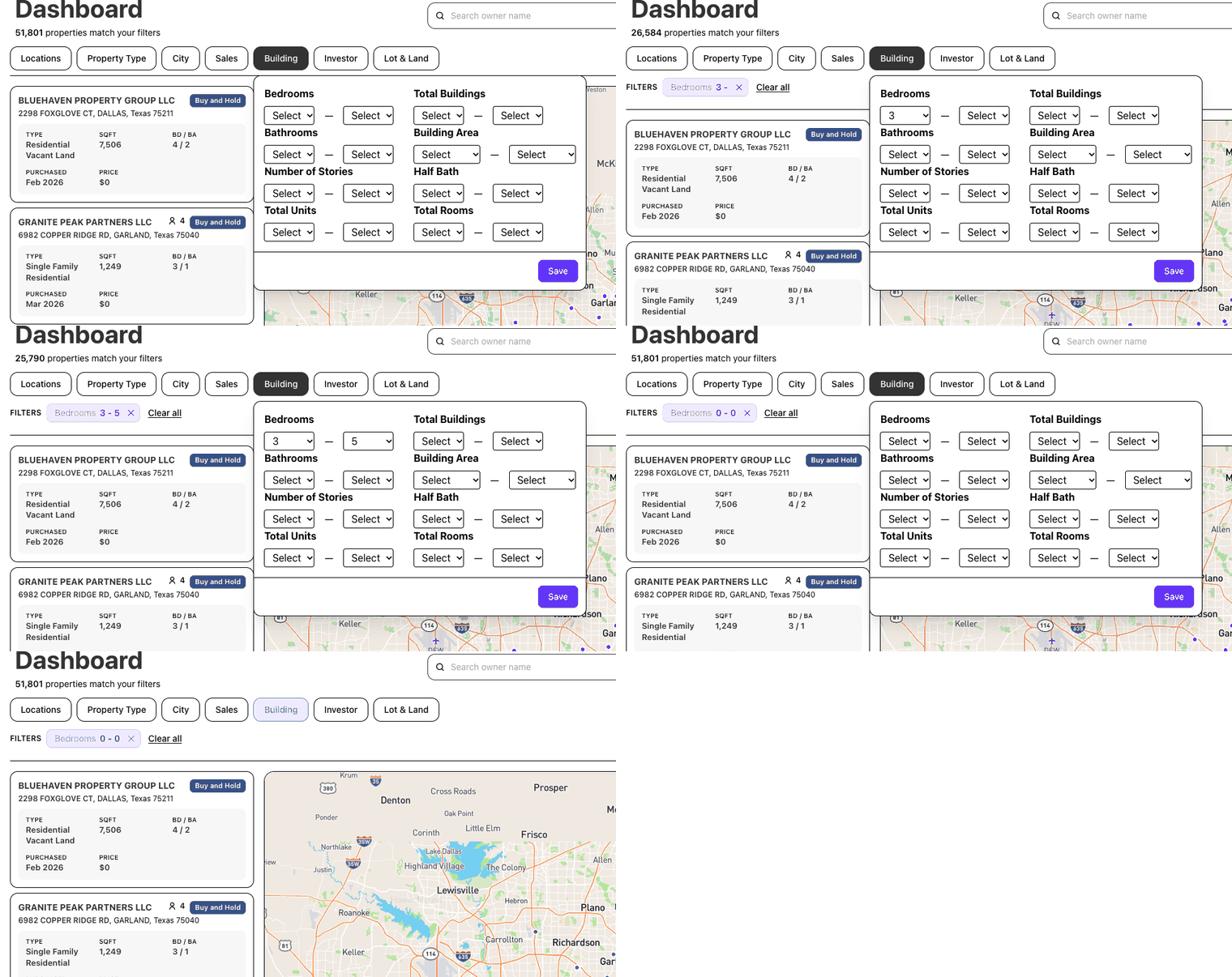 Eight min/max ranges describe the building.
Set those to match the contract and the owners left are the ones whose holdings look like your property.
5. Show, answer and collect offers
Buyers will want access. Many wholesalers run one or two open walkthroughs rather than a dozen private showings, which saves time and lets buyers see that there is interest. Answer questions in writing where you can so every buyer hears the same thing.
6. Qualify and choose
The highest offer is not always the best one. A slightly lower offer from a buyer with recent purchases, real proof of funds and meaningful earnest money is usually worth more than a high offer from someone you cannot verify.
7. Assign and close
Sign the assignment agreement, collect earnest money, coordinate with the title company or closing attorney, and stay in touch until the closing is funded. Disposition is not finished when the buyer says yes. It is finished when the wire lands.
What a disposition manager does
On a team, the disposition manager owns steps three through seven, and ideally step one as well. The role is part marketer, part salesperson and part project manager. A good one knows the buyers in each market personally, knows what each one buys, and can tell within an hour of a contract being signed who is likely to take it.
The most useful thing a disposition manager builds is not a big list. It is an accurate one: buyers grouped by strategy and price band, with their last purchase date kept current.
The numbers that tell you dispo is working
A few measures show whether your disposition process is healthy:
- Days from contract to assignment. Shorter is better, and a rising trend is an early warning.
- Response rate on deal emails. If it falls, you are sending deals that do not fit, or sending too many.
- Assignments that fail after signing. This points to qualification problems.
- Contracts that expire unassigned. This usually points back to acquisition pricing.
Market conditions move these numbers too. A county where investor buying is slowing will stretch your days to assignment even if you change nothing. Franklin County, Ohio shows 9,204 investor acquisitions in the last 12 months against about 20,396 in the year before, while Tarrant County, Texas went from about 5,876 to 8,252. The same disposition process would feel very different in those two counties this year. You can check the pace for any covered county on its public page, for example the Tarrant County market page.
Common disposition mistakes
- Starting dispo after signing. By then the clock is already running.
- Pricing from the seller's number. Buyers do not care what you paid; they care what it is worth to them.
- Blasting everyone. It trains buyers to ignore you.
- Choosing the highest unverified offer. It is the most common way a deal falls through.
- Going quiet after the assignment. Problems at title are easier to solve early.
In short
Disposition is the buyer-facing half of wholesaling: pricing, packaging, matching and closing the assignment. It works best when it starts before the contract is signed, when the buyer list is accurate rather than large, and when each deal goes first to the few buyers whose purchases already look like it.


