Grandview Heights, OH Investor Market Snapshot
Recorded investor purchases and holdings over the past year.
Data last updated
In Grandview Heights, investors own about 213 tracked properties across 13 active buyers, with a median investor purchase price near $93,000. 7 were acquired in the last 12 months.
Acquisition Activity
Property Characteristics
Investment Strategy Mix
Hottest ZIP codes for investors
What the Grandview Heights numbers mean
Grandview Heights by the numbers
Acquisition pace is cooling: 7 properties bought in the last 12 months against roughly 34 the year before, down about 79%. Fewer buyers are competing per deal, which usually means more room to negotiate but a longer search for the right one.
Across Grandview Heights, 13 active buyers account for approximately 213 investor-held properties. Averaging below 0.5 purchases per buyer last year, this is a wide, shallow pool — a numbers game where reach beats depth.
Investors here buy at a median of $93,000. The average of $128,000 sits well above it, so a tail of higher-priced deals is pulling the mean up — most activity happens below the average, and pricing off the median is the safer read.
3.3% of the investor-owned stock in Grandview Heights was bought within the last 12 months. Owners here sit on property; at this pace the stock would take 30+ years to turn over, so new supply is scarce.
The same numbers from three sides of the table
Old housing and almost no new building is the signature of a mature area. Supply is set; the only lever is condition. Old stock that is not trading much is the harder version of this market. The improvement opportunity exists on paper, but the capital to execute it is not visibly active, and an area can sit in that state for years — this is where a market genuinely needs developers or renovation money to arrive before much changes.
With a median near $93,000, many purchases here are within reach of a buyer's own cash, which removes the lender from the transaction entirely. Those deals close fastest of all, and the buyer's only real constraint is how many they can manage at once. With stock moving slowly, buyers here are planning to own for a while. Carry cost becomes part of the underwriting, which favors properties that can be occupied sooner rather than gutted first.
Construction has gone quiet. 198 such investments sit in the record and zero landed in the last quarter, which is a real change in behavior rather than noise, and usually means capital is holding for a reason.
Buyers active in Grandview Heights are underwriting age: the stock is old, and the rehab budgets reflect it. That model has a ceiling you can calculate. A purchase at $93,000 implies an after-repair value near $133,000 once the usual 70%-less-repairs discipline is applied — which is why a contract priced on hope rather than on resale gets a fast no.
Grandview Heights holds investor property that mostly is not moving — roughly 3% turnover over twelve months. That is a holding market, and holding markets place fewer contracts regardless of how many buyers appear on a list. With only 13 active buyers, relationship risk is real: lose one and you have lost a meaningful share of your exit options. Markets this thin reward depth over volume, and reward having a second area in rotation.
13 buyers and only 7 purchases in a year means most buyers here are waiting rather than closing. Controlling a contract is the scarce position; placing one is not the hard part.
In a market this still, the owner's frame of reference is dated. Expect genuine interest in the conversation alongside a number rooted in an older market. The age of the housing shapes the motivation. Where most stock predates 1980, the owner considering a sale is often facing a repair bill they do not want to finance — a roof, a system, a code item — and an investor's cash offer is attractive precisely because it skips the renovation they would otherwise have to fund themselves.
Turning this data into deals
Grandview Heights carries real single-point risk: 13 buyers is few enough that the loss of one or two materially changes your options. Historical figures cannot flag that in advance, so diversification across markets is the only practical hedge. Worth holding in mind that everything above is built from recorded sales, and recording lags closing. The picture is accurate and slightly behind — fine for choosing a market, less so for calling a turn.
Deals that land near $93,000 — call it $79,000 to $107,000 — are the easiest to place here. With buying this spread out, plan to put a deal in front of dozens of the 13 buyers rather than a handful. In a cooling market, price the assignment conservatively — buyers have options and they know it.
Within Grandview Heights, ZIP 43212 carries the heaviest investor activity — the obvious place to begin.
173 contact records are on file for this area, which is the difference between a list of LLC names and people you can actually call.
Begin with a shortlist near 3 names, selected on what they have bought rather than on how reachable they are. Working Grandview Heights from a focused list is how you develop a feel for local pricing without burning the relationships you will need later. Finally, budget time. Slow turnover means a longer search for the buyer who is actually active this quarter, and an assignment priced for a quick flip will erode while you look.
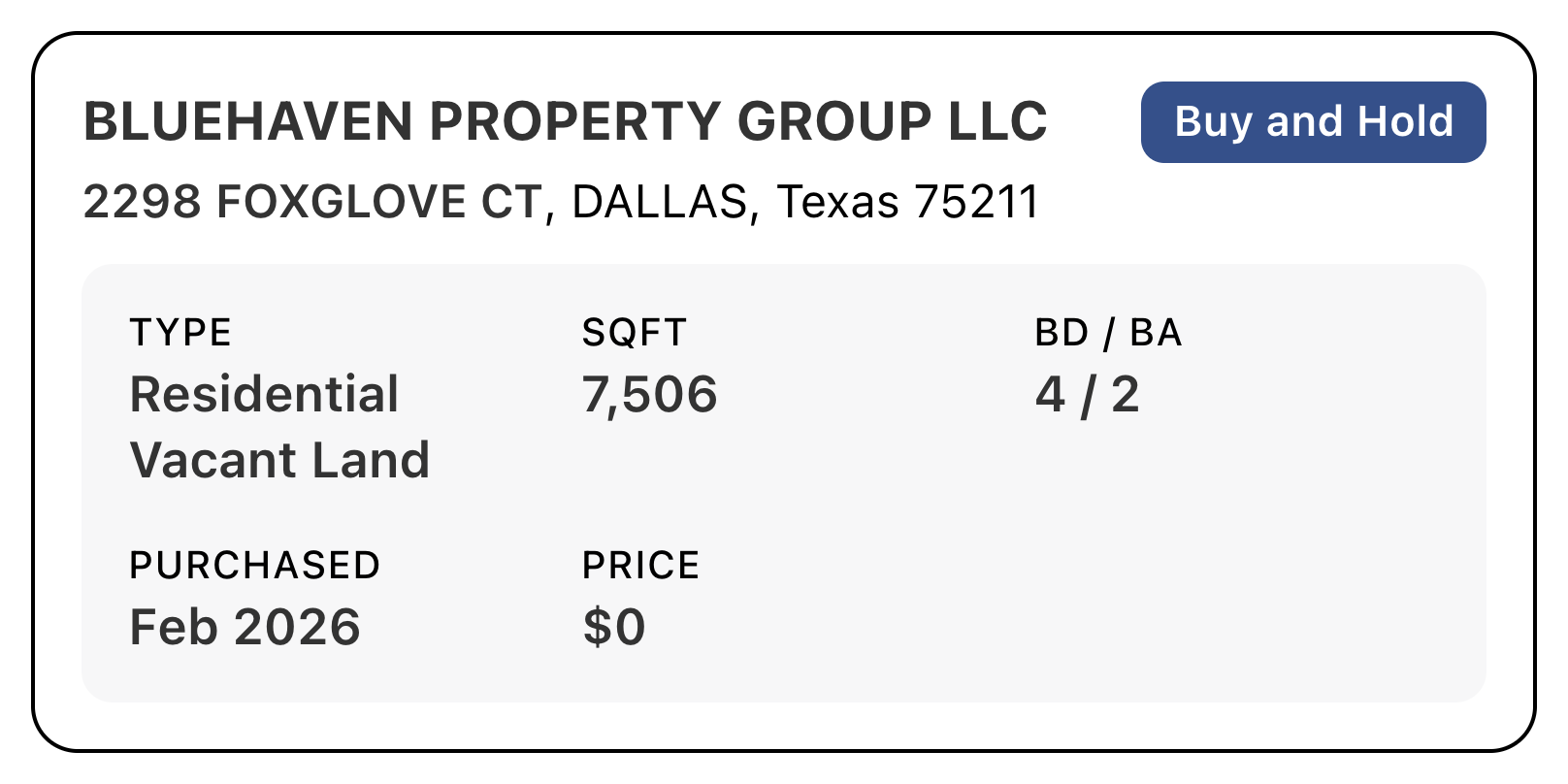
What investors are buying in Grandview Heights
Typical construction year on investor-owned property is 1925. About 98.5% predates 1980, so lead-paint disclosure, older systems and heavier rehab budgets are normal here.
Investors have not bought new builds here in the past three months; the action is in existing homes. 198 tracked investments involve construction — a signal of buyers willing to build or rebuild. Value-add work (98.5%) far outweighs new construction (0.0%), so fixer inventory has a ready audience.
98.5% of tracked activity in Grandview Heights is value-add / rehab. That favors sellers bringing renovation projects: the capital here is set up to take on work, not to avoid it.
Behind the leading strategy sits buy & hold (1.5%) and new construction (0.0%), so a deal that misses the main buyer profile still has somewhere to go.
Square footage centers on 1,616, so think mid-sized homes; 3 bd / 1 ba is the layout you will see on the most deal sheets. As a back-of-envelope figure, that is about $58 per square foot; anything far from it deserves a second look at condition or location.
- Value-Add / Rehab 98.5%
- Buy & Hold 1.5%
Grandview Heights against other communities in Franklin County
On purchase volume, Grandview Heights places 23rd of the 36 communities we cover in Franklin County, at 7 deals. A typical community in the county logs 18, so this is one of the quieter corners — less competition, smaller buyer pool. Put another way, under 1% of the county's investor deals in the last year happened here.
Grandview Heights is a value market by county standards: its $93,000 median runs 23% below the $121,000 typical of other communities. A step down is Clinton Twp at $84,000; a step up, Obetz at $100,000.
While Franklin County is down 55% year over year, Grandview Heights is down 79%. Falling behind the county can mean softer competition for whoever is still buying here.
Expect older homes here — median construction in 1925, 45 years earlier than the 1970 typical across the county. Pre-1980 stock makes up 99% here against 72% in a typical community, so rehab budgets should run heavier than county comps suggest. Buildings are larger too, around 1,616 sq ft versus 1,404 for the county's typical community.
If you like Grandview Heights, look at Sharon Twp next — similar volume (7 deals) and similar pricing ($110,000). Columbus tops Franklin County with 7,712 purchases — many of the county's most active buyers will be working there too.
| Community | Active buyers | Purchases (12 mo) | Year over year | Median price | Median year built |
|---|---|---|---|---|---|
| Columbus | 609 | 7,712 | -56% | $132,000 | 1986 |
| Hilliard | 52 | 259 | -62% | $172,000 | 2014 |
| Prairie Twp | 60 | 244 | +639% | $125,000 | 1962 |
| Grove City | 72 | 117 | -79% | $176,000 | 1988 |
| New Albany | 22 | 93 | +27% | $350,000 | 1994 |
| Bexley | 18 | 68 | +300% | $128,000 | 1941 |
| Reynoldsburg | 44 | 45 | -69% | $125,000 | 1971 |
| Grandview Heights(this page) | 13 | 7 | -79% | $93,000 | 1925 |
These numbers come from recorded purchases in this city, updated as new records land. They report what has already happened and are not a prediction or investment advice.
Cash buyers by ZIP in Grandview Heights
Popular searches around Grandview Heights
What people ask about this market
- How many investors are active in Grandview Heights?
- There are 13 active investors owning 213 tracked properties in Grandview Heights.
- What is the median investor purchase price in Grandview Heights?
- The median investor purchase price is about $93,000 in Grandview Heights.
- How active is the Grandview Heights investor market recently?
- 7 properties were acquired by investors in the last 12 months in Grandview Heights.
- Is there recent new-construction investor activity in Grandview Heights?
- 0 new-construction homes were acquired by investors in Grandview Heights in the last 90 days.